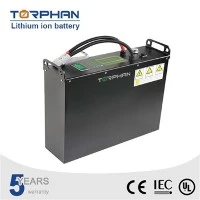

Hey there! I'm a supplier of 24V lithium-ion batteries, and today I want to dig into a super important topic: how the power density of our 24V lithium-ion batteries stacks up against other battery types.
First off, let's talk about what power density actually means. Power density is all about how much power a battery can store and deliver in a given volume or mass. It's like packing a lot of energy into a small space. The higher the power density, the more energy you can get from a battery of a certain size or weight.
Now, let's compare our 24V lithium-ion batteries with some other common battery types out there.
Lead - Acid Batteries
Lead - acid batteries have been around for ages. They're pretty well - known, especially in applications like car batteries. But when it comes to power density, they're not the greatest. These batteries are quite heavy and bulky. For the same amount of energy storage, a lead - acid battery will take up a lot more space and weigh a whole lot more than a lithium - ion battery.
Let's say you're looking to power a small off - grid solar system. If you use lead - acid batteries, you'll need a big storage area just to hold them all. And because they're so heavy, moving them around can be a real pain. On the other hand, our 24V lithium - ion batteries offer a much higher power density. You can get the same amount of energy in a much smaller and lighter package. This makes them a great choice for applications where space and weight are at a premium, like in RVs or small boats.
Nickel - Metal Hydride (NiMH) Batteries
NiMH batteries were a popular alternative to lead - acid and early lithium - ion batteries. They have a better power density than lead - acid batteries, but still fall short compared to lithium - ion batteries. NiMH batteries can store a decent amount of energy, but they tend to self - discharge faster than lithium - ion batteries.
In terms of power density, our 24V lithium - ion batteries can store more energy per unit volume and mass. This means that for a given application, you can use fewer lithium - ion batteries to achieve the same power output. For example, if you're powering a portable electronic device, a lithium - ion battery will last longer and take up less space than a NiMH battery.
Lithium - Ion vs. Other Lithium - Based Batteries
There are different types of lithium - based batteries, like lithium - polymer and lithium - iron - phosphate (LiFePO4). While they all fall under the lithium - ion umbrella, there are some differences in power density.
Lithium - polymer batteries are known for their flexibility and can be made into different shapes. However, in terms of power density, our 24V lithium - ion batteries are often more efficient. They can store more energy in a more compact form.
LiFePO4 batteries are popular for their long cycle life and safety. But when it comes to power density, our 24V lithium - ion batteries can still offer a competitive edge. They can provide a higher power output in a smaller package, which is great for applications that require a lot of power in a short amount of time.
Why Power Density Matters
The high power density of our 24V lithium - ion batteries has a lot of benefits. For one, it means you can have a more compact and lightweight battery system. This is crucial in applications like electric vehicles, where every pound and inch matters. A lighter battery means better fuel efficiency and longer range.
In solar energy storage, high power density allows you to store more energy in a smaller space. This is especially important for residential solar systems, where space may be limited. You can get a more efficient and effective energy storage solution with our 24V lithium - ion batteries.


Our Product Offerings
We offer a range of lithium - ion battery products that are not only high in power density but also reliable and long - lasting. If you're interested in solar applications, we have the Lithium Ion Solar Battery Pack. This pack is designed to store solar energy efficiently and can be easily integrated into your solar system.
For those who need a higher voltage, we also have the Solar Batteries Lithium Ion 48 Volts. These batteries are perfect for larger solar installations or applications that require a higher power supply.
And if you're looking for a deep - cycle battery for solar use, our 48v Deep Cycle Rechargeable Solar Li Ion Battery is a great option. It can withstand multiple charge and discharge cycles, ensuring a long - term and reliable energy storage solution.
Conclusion
In conclusion, the power density of our 24V lithium - ion batteries gives them a significant advantage over other battery types. Whether you're looking for a compact solution for a portable device or a reliable energy storage system for your solar setup, our lithium - ion batteries are a great choice.
If you're interested in learning more about our products or have any questions about power density and battery applications, don't hesitate to reach out. We're here to help you find the best battery solution for your needs. Let's start a conversation and see how we can work together to meet your energy requirements.
References
- Linden, D., & Reddy, T. B. (2002). Handbook of Batteries. McGraw - Hill.
- Tarascon, J. M., & Armand, M. (2001). Issues and challenges facing rechargeable lithium batteries. Nature, 414(6861), 359 - 367.