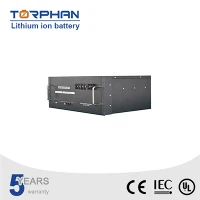

Hey there! I'm an active balance BMS (Battery Management System) supplier, and today I wanna have an open chat about the disadvantages of active balance BMS. Even though active balance BMS has lots of cool features and benefits, it's not all sunshine and rainbows. Let's dig into the not - so - great parts.
1. High Cost
One of the most obvious drawbacks of active balance BMS is the cost. Developing and manufacturing an active balance BMS involves a bunch of advanced components and complex circuitry. These components, like high - precision sensors, power transistors, and sophisticated microcontrollers, don't come cheap. For instance, the high - end sensors used to accurately measure the state of charge (SOC) and state of health (SOH) of each battery cell in a pack can cost a fortune.
Moreover, the research and development (R&D) costs associated with creating an efficient active balance BMS are sky - high. Engineers have to spend a ton of time and resources on optimizing the balancing algorithms and ensuring the system's reliability. All these costs get passed on to the customers. If you're looking at Lithium - ion Battery Packs with an active balance BMS, you'll notice that they're significantly more expensive than those with passive balance BMS or no BMS at all. This high cost can be a major deterrent for small - scale users or those on a tight budget.
2. Complexity in Design and Installation
Active balance BMS is far more complex than its passive counterpart. The design process requires a deep understanding of battery chemistry, electrical engineering, and control theory. Designers need to take into account various factors such as the number of battery cells, the type of battery chemistry (e.g., lithium - ion, lead - acid), and the application requirements.
When it comes to installation, things get even trickier. Installing an active balance BMS demands a certain level of technical expertise. You can't just hook it up like a simple device. Incorrect installation can lead to a whole host of problems, including malfunctioning of the BMS, reduced battery performance, and even safety hazards. For example, if the wiring is not done properly, it can cause short - circuits or inaccurate readings of the battery parameters. This complexity makes it less accessible for DIY enthusiasts who might want to build their own Diy Lithium Ups Battery.
3. Higher Power Consumption
Another disadvantage is the relatively high power consumption of active balance BMS. The active balancing process involves transferring energy between battery cells to equalize their SOC. This energy transfer requires additional power, which is drawn from the battery pack itself. In some cases, the power consumed by the BMS can be a significant percentage of the total battery capacity, especially when the battery is in a low - charge state.
This higher power consumption can reduce the overall efficiency of the battery system. For applications where energy efficiency is crucial, such as electric vehicles or portable electronic devices, this can be a real problem. It means that you'll get less usable energy from the battery, and you might have to recharge it more frequently.
4. Increased Heat Generation
The active balancing process generates heat. When energy is transferred between battery cells, there are resistive losses in the circuitry, which result in heat production. Excessive heat can have a negative impact on the performance and lifespan of the battery cells. High temperatures can accelerate the chemical reactions inside the battery, leading to faster degradation of the electrodes and electrolyte.


In addition, heat can also affect the performance of the BMS itself. The electronic components in the BMS are sensitive to temperature, and overheating can cause them to malfunction or even fail. To deal with the heat, additional cooling mechanisms may be required, which further adds to the cost and complexity of the system. For example, in LFP Forklift Battery With Lithium, where the battery is under heavy load, the heat generated by the active balance BMS can be a major concern.
5. Limited Compatibility
Active balance BMS may not be compatible with all types of battery chemistries and configurations. Different battery chemistries have different charging and discharging characteristics, and an active balance BMS designed for one type of battery may not work well with another. For example, a BMS optimized for lithium - ion batteries may not be suitable for lead - acid batteries.
Moreover, the number and arrangement of battery cells in a pack also matter. An active balance BMS that is designed for a specific number of cells in a series - parallel configuration may not function properly if the configuration is changed. This limited compatibility can be a headache for users who want to customize their battery packs or use different types of batteries in their applications.
6. Maintenance and Reliability Issues
Maintaining an active balance BMS is not a walk in the park. The complex circuitry and advanced components are more prone to failures compared to simpler systems. Over time, the electronic components can wear out, and the balancing algorithms may need to be updated to ensure optimal performance.
Diagnosing problems with an active balance BMS can be difficult. Since it involves multiple sensors, controllers, and communication interfaces, pinpointing the root cause of a malfunction can take a lot of time and effort. In some cases, users may need to rely on the manufacturer's technical support, which can be time - consuming and costly.
Despite these disadvantages, active balance BMS still offers many advantages in terms of battery performance and safety. If you're willing to overlook these drawbacks and are looking for a high - performance BMS for your battery pack, we're here to help. Whether you're working on a Diy Lithium Ups Battery, Lithium - ion Battery Packs, or LFP Forklift Battery With Lithium, we can provide you with the right active balance BMS solution. If you're interested in learning more or want to discuss your specific requirements, feel free to reach out to us for a procurement discussion.
References
- Battery Management Systems: Design by Principles, Maxim Integrated
- Lithium - Ion Batteries: Science and Technologies, edited by Gholam - Abas Nazri and Gianfranco Pistoia