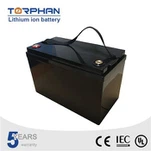


When conventional batteries cannot meet product requirements, companies need to customize batteries. When choosing a lithium battery customization manufacturer, factors such as product quality, production capacity, technical support, after-sales service and cost-effectiveness need to be considered to ensure the smooth delivery of the product. Therefore, through detailed research and evaluation, you need to choose a reliable and customized lithium battery manufacturer that meets your needs.

1. Clarify the lithium battery requirements
It is necessary to clarify the application scenarios, product specifications, materials and other requirements of customized lithium batteries within the company. Specific requirements are: battery capacity range, voltage, size (length, style, thickness), multiplier, high and low temperature range, impedance, weight range, cycle life, safety requirements;
Some companies may not be very clear about the demand for batteries in the early stage, and need to set up a project team with the customized manufacturer. According to the actual situation of the product application scenario, the two parties discuss and communicate to customize the most suitable battery.
2. Manufacturer strength
In the world, there are many battery manufacturers, and the scale varies greatly, so they need to be selected carefully. First, understand the manufacturer's business license, years of establishment, production license, scale, etc. Whether the factory has passed ISO 9001 quality management system certification and ISO 14001 environmental management system certification. Whether its batteries have passed safety performance certification, such as IEC, UL, CE, RoHS, UN38.3, Battery Directive, PSE, KC, CQC and other qualifications.
3. Production capacity
To determine the number of lithium batteries that need to be customized, if the demand is large and urgent, you need to find a factory with large-scale production capacity, and there is no need to wait for production scheduling. Therefore, it is very necessary to understand the manufacturer's production capacity, scale, production process and technology, technical equipment, R&D capabilities, production scheduling, communication timeliness, etc.
4. Quality control
The quality of the battery is related to the safety of the product, and the battery is very important. Quality control is the most critical factor in whether the battery is qualified. Therefore, it is necessary to understand whether the manufacturer has a complete quality management system and whether it can monitor the entire quality control from raw materials to finished products. At the same time, whether the battery manufacturer is equipped with advanced testing equipment and laboratories that can be used for cell testing, finished product testing, performance testing, safety testing, life testing and other tests.
5. Price
Price is the most concerned factor for many buyers, and even determines whether to complete the transaction. The price of the battery is determined by many factors, such as: the number of customizations, the capacity of the battery, the production cycle and many other factors. There may be relatively large price differences in different factories. The purchase price is one of the reference indicators, and the product quality and transportation, installation, maintenance, service and other costs must also be guaranteed. Choose the most suitable manufacturer by comparing with multiple manufacturers.
6. Customer Cases and Corporate Reputation
Ask the manufacturer if there are successful cases of similar projects, whether there is experience in cooperating with well-known brands, when it will be completed, and who is responsible? At the same time, you also need to understand the manufacturer's corporate qualifications, credit ratings, operating conditions and reputation. If you can contact the manufacturer's customers directly, you can understand their true evaluation and feedback on the manufacturer.
7. After-sales service
After-sales service is the most critical part of the manufacturer's service system. Whether it can provide comprehensive technical support and training services to help solve technical problems related to batteries in the project; whether it has a comprehensive return policy, storage guidelines, transportation safety and security services - these are all important factors.
8. On-site inspection
If a large number of lithium batteries need to be customized, the production cycle is relatively long. Under permitted conditions, you need to visit the manufacturer's battery factory and directly observe the battery production environment, manufacturing process, management system, corporate culture, business philosophy, service concept and development plan. At the same time, face-to-face communication with the manufacturer's management, technicians, service personnel and production personnel will provide an in-depth understanding of the company's professional level, service awareness and willingness to cooperate.
9. Sample testing
Require lithium battery manufacturers to provide samples for testing. After testing, technicians should evaluate the samples to ensure that the performance of the lithium battery meets the product requirements.
The more customized lithium batteries, the more detailed the preliminary research and evaluation needs. If less customization is required, determine the strength of the research based on the actual situation of the company (for example: whether a field visit is required). Finally, through comprehensive comparison, select the manufacturer that is most suitable for customized production.