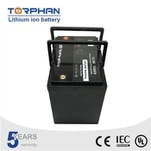


Lithium Battery Energy storage —— New battery for clean Energy storage
A new study by the Clean Energy Commission believes that large-scale lithium battery energy storage is the best choice based on cost, flexibility, network services and emissions for the current power peak regulation services.
Australia's energy storage demand climbs steadily as large battery energy storage is the top choice
"Mass batteries are now undoubtedly the best choice for a period of high power demand," said Kane Thornton, CEO of the Clean Energy Commission.
According to a new paper by the Clean Energy Commission, batteries are cheaper to provide power peak tuning services than in an open cycle gas turbine plant.
The document compares a new 250 MW gas peak regulator with a 250 MW four-hour grid-size battery, and found that battery storage schemes could save more than 30% in costs while providing greater flexibility and significantly reducing emission intensity.
"The battery can provide quality peak adjustment service in the high demand period traditionally met by the peak adjustment gas plant, the battery can boost rapidly, start time near zero, and provide better frequency response," Thornton said. Power demand has to match supply at any time, so on very hot days, when demand surges, we soon need more supply to respond. Sometimes only a few seconds; sometimes several hours. In this regard, the mass battery capability is unparalleled. Over the last three years, batteries have played an important role in maintaining the power grid stable and maintaining the power supply for energy users."
Energy market operators expect that the entire national power market will require new schedulable resources from 6 to 19 GW by 2040. The fact that battery energy storage is currently the safest option to meet this level of schedulable capacity is reflected in the market through actual projects and an estimated $ 6 billion in investment pipelines.
Since 2018,8.9 GW of large battery energy storage projects in Australia have received financial commitments, proposals or approval. This represents 42,000 construction and installation jobs, and 11,000 ongoing operations and maintenance jobs.
This amazing momentum, with 15 major battery storage projects announced this year alone, representing a 6.6 GW capacity and a $ 4.3 billion investment.
"With battery technology advancing and the establishment of a new market, the business case of batteries will continue to improve to reward its services," Thornton said. However, the certainty of long-term investment still relies on appropriate market reform and forward-looking policies to motivate new, flexible technologies that are needed to supplement renewable energy."