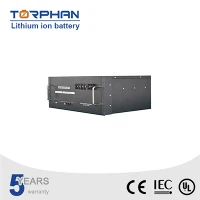

When it comes to power backup solutions, Lithium Ion UPS (Uninterruptible Power Supply) batteries have emerged as a popular choice due to their high energy density, long lifespan, and low maintenance requirements. As a trusted Lithium Ion UPS Battery supplier, I often receive inquiries about the charge - discharge cycle time of these batteries. In this blog, I will delve into this important topic, providing in - depth knowledge to help you make informed decisions.
Understanding the Charge - Discharge Cycle
A charge - discharge cycle refers to the process of charging a battery from a fully discharged state to a fully charged state and then discharging it back to a specified low - charge level. For Lithium Ion UPS batteries, this cycle is a crucial factor in determining their overall performance and longevity.
Factors Affecting Charge Time
The charge time of a Lithium Ion UPS battery is influenced by several factors:
- Battery Capacity: Larger capacity batteries generally take longer to charge. For example, a 100Ah Lithium Ion UPS battery will take more time to reach a full charge compared to a 50Ah battery, assuming the charging current is the same.
- Charging Current: The rate at which you charge the battery is a significant determinant. Higher charging currents can reduce charge time but should be used within the battery's recommended limits. Fast charging with excessive current can lead to overheating and reduce the battery's lifespan. Most Lithium Ion UPS batteries have an optimal charging current range specified by the manufacturer.
- State of Charge (SOC) at the Start: A battery that is nearly completely discharged will take longer to charge compared to one that is only partially discharged. This is because as the battery approaches full charge, the charging process slows down to prevent overcharging.
Factors Affecting Discharge Time
The discharge time is equally important and is affected by these elements:
- Load Power: The power consumed by the connected devices (load) is the most dominant factor. A high - power load will drain the battery faster than a low - power load. For instance, if you connect a high - wattage server to your UPS, the battery will discharge more quickly compared to powering a few small LED lights.
- Battery Efficiency: Lithium Ion batteries are generally highly efficient, but factors such as temperature and internal resistance can affect their efficiency during discharge. Higher internal resistance can lead to more energy losses, reducing the effective discharge time.
- Depth of Discharge (DOD): The depth to which you discharge the battery also matters. A deeper discharge (using more of the battery's capacity) will result in a shorter discharge time per cycle. However, frequent deep discharges can also reduce the battery's overall lifespan.
Typical Charge - Discharge Cycle Times
The charge - discharge cycle times can vary widely based on the battery's specifications and usage conditions. On average, a Lithium Ion UPS battery with a moderate capacity (e.g., 50 - 100Ah) and a standard charging current may take anywhere from 2 to 8 hours to charge fully.
For discharge, if we consider a common home or small - office setup with a load power of 500 - 1000 watts, a well - sized Lithium Ion UPS battery might provide backup power for 15 minutes to a few hours. In a data - center environment with high - power servers, the discharge time could be much shorter, perhaps only a few minutes, unless multiple large - capacity batteries are used in parallel.
Importance of Charge - Discharge Cycle Management
Proper management of the charge - discharge cycle is essential for maximizing the performance and lifespan of Lithium Ion UPS batteries. Overcharging or over - discharging can cause irreversible damage to the battery cells, leading to reduced capacity, increased internal resistance, and ultimately, a shorter lifespan.
Many of our UPS Li Ion Battery with BMS are equipped with a Battery Management System (BMS). The BMS plays a crucial role in monitoring and controlling the charge - discharge process. It ensures that the battery is charged and discharged within the safe operating limits, protecting the battery from overcharging, over - discharging, and short - circuits.
Applications and Their Impact on Cycle Time
Different applications have different requirements for charge - discharge cycle time:
Home Use
For Lithium Ion Ups For Home, the primary goal is to provide short - term power backup during power outages. Home appliances such as lights, refrigerators, and routers typically have relatively low power requirements. A home - use Lithium Ion UPS battery can be designed to have a relatively long discharge time at a low - power load, allowing essential devices to run for a few hours until the power is restored. The charge time is also important as it determines how quickly the battery can be ready for the next power outage.
Industrial and Commercial Use
In industrial and commercial settings, such as data centers and manufacturing plants, the demand for reliable power backup is much higher. These applications often require high - power loads to be supported immediately during a power outage. As a result, the discharge time may be shorter, but the battery needs to be able to handle high - current discharges. Additionally, the charge time should be minimized to get the system back to full operational capacity as soon as possible. Our Lithium Ion Backup Power Supply is designed to meet these demanding requirements, providing stable and efficient power during critical moments.
Tips for Optimizing Charge - Discharge Cycle Time
- Follow Manufacturer's Guidelines: Always adhere to the manufacturer's recommendations regarding charging current, temperature ranges, and discharge limits. This ensures that the battery is used within its safe and optimal operating conditions.
- Regular Maintenance: Perform regular maintenance checks on the battery and the UPS system. This includes inspecting for any signs of damage, cleaning the terminals, and verifying the functionality of the BMS.
- Proper Load Management: Choose the appropriate battery capacity based on your load requirements. Avoid overloading the battery, as this can lead to excessive heat generation and reduced efficiency.
Contact for Procurement
If you are in the market for high - quality Lithium Ion UPS batteries, we are here to assist you. Our range of products is engineered to provide reliable power backup solutions for various applications. Whether you need a battery for your home, office, or industrial facility, we have the expertise and products to meet your needs. Please reach out to our team for further information, product specifications, and to initiate procurement discussions.


References
- Barai, S.K., Das, S. & Tiwari, A. (2021). Lithium - ion battery technologies: State - of - the - art and future perspectives. Journal of Energy Storage, 43, 103004.
- Korthauer, A., Ratnakumar, B. V., & Smart, M. C. (2017). Lithium - ion batteries. Wiley Encyclopedia of Electrical and Electronics Engineering.
- Linden, D., & Reddy, T. B. (2002). Handbook of batteries. McGraw - Hill.