
Hey there! As a supplier of Lithium Ion Batteries, I've seen firsthand how these powerhouses are shaking up the economic landscape. Let's dive into the economic impacts of Lithium Ion Batteries and see why they're such a big deal.
1. Market Growth and Demand
The demand for Lithium Ion Batteries has been skyrocketing in recent years. This is mainly due to the boom in the electric vehicle (EV) industry. More and more people are ditching their gas - guzzling cars for EVs, and Lithium Ion Batteries are at the heart of these vehicles. As a result, the market for these batteries has expanded like crazy.
For instance, major automakers like Tesla, Nissan, and BMW are all investing heavily in EV production. This has created a huge demand for high - quality Lithium Ion Batteries. And it's not just the automotive sector. The consumer electronics market, including smartphones, laptops, and tablets, also relies heavily on these batteries.
The growth in demand has led to an increase in production. Battery manufacturers are building new factories and expanding existing ones to keep up. This has a direct impact on the economy. It creates jobs in manufacturing, from the assembly line workers to the engineers designing the next - generation batteries.
2. Cost - Benefit Analysis
One of the key economic aspects of Lithium Ion Batteries is the cost - benefit ratio. Initially, the cost of Lithium Ion Batteries was quite high. But over the years, thanks to technological advancements and economies of scale, the cost has been coming down.
When it comes to electric vehicles, the high upfront cost of the battery was a major deterrent for consumers. However, as the cost of Lithium Ion Batteries has decreased, the price of EVs has become more competitive with traditional gasoline cars. This has made EVs more accessible to a wider range of consumers.
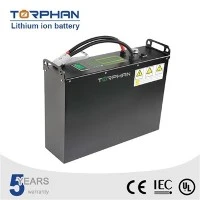
In the long run, Lithium Ion Batteries offer significant cost savings. For example, in the case of forklifts, 24v Forklift Lithium Batteries are more energy - efficient than traditional lead - acid batteries. They have a longer lifespan, require less maintenance, and charge faster. This means lower operating costs for businesses that use forklifts in their operations.
Similarly, 48v 200ah Rechargeable Battery can be used in various applications, such as off - grid power systems. These batteries can store energy from renewable sources like solar and wind, reducing the reliance on the grid. Over time, the savings from not having to pay high electricity bills can be substantial.
3. Impact on the Energy Sector
Lithium Ion Batteries are playing a crucial role in the transition to renewable energy. As the world moves towards a more sustainable future, the need for energy storage solutions has become more pressing. Solar and wind energy are intermittent sources, which means they don't produce power all the time. Lithium Ion Batteries can store the excess energy generated during peak production times and release it when needed.
Lithium LFP Ion Solar Batteries are a great example. They are specifically designed for solar energy storage. By using these batteries, households and businesses can become more self - sufficient in terms of energy. This reduces the strain on the power grid and can also lead to cost savings.
The growth of the energy storage market also has a positive impact on the economy. It creates new business opportunities for battery manufacturers, installers, and maintenance providers. It also encourages investment in research and development to improve battery technology.
4. Supply Chain and Global Trade
The production of Lithium Ion Batteries involves a complex supply chain. Lithium, cobalt, nickel, and other raw materials are essential for battery production. The extraction and processing of these materials are concentrated in certain regions of the world. For example, a large portion of the world's lithium comes from countries like Chile, Australia, and Argentina.


This has implications for global trade. Countries that are rich in these raw materials can benefit from exporting them. At the same time, battery manufacturers need to ensure a stable supply of these materials to meet the growing demand. This has led to strategic partnerships and investments in the mining and processing industries.
However, there are also challenges in the supply chain. The extraction of raw materials can have environmental and social impacts. There are concerns about child labor in some cobalt - mining regions, for example. Battery manufacturers are increasingly looking for ways to source raw materials in a more sustainable and ethical manner.
5. Job Creation and Economic Development
As mentioned earlier, the growth of the Lithium Ion Battery industry has led to job creation. From the mining of raw materials to the manufacturing, research, and development of batteries, there are a wide range of job opportunities.
In regions where battery factories are located, there is an influx of new jobs. This can have a positive impact on the local economy. Workers earn wages, which they spend on goods and services in the community. This, in turn, stimulates economic growth in the area.
Moreover, the development of the battery industry can also attract other related industries. For example, companies that produce battery components or provide battery - related services may set up shop near battery manufacturing plants. This creates a cluster effect, which can further boost economic development.
Let's Talk Business!
If you're in the market for high - quality Lithium Ion Batteries, whether it's for your electric vehicle, forklift, or solar energy system, we've got you covered. Our team is ready to discuss your specific needs and provide you with the best solutions. Don't hesitate to reach out and start a conversation about how our Lithium Ion Batteries can benefit your business.
References
- International Energy Agency. (2021). Global EV Outlook 2021.
- BloombergNEF. (2022). Battery Price Survey.
- U.S. Department of Energy. (2020). Energy Storage Grand Challenge.